

Para muchos impresores, el momento de sacar una estampa es casi sagrado. Has tallado, has entintado, has tomado aliento — y ahora todo depende del papel bajo tus manos. Una mala elección puede enturbiar tus líneas, manchar la tinta o dejarte con un resultado que no se acerca ni remotamente a lo que el bloque tenía para ofrecer. El papel adecuado, en cambio, puede hacer que tu impresión cante.
Llevamos años imprimiendo bloques de lino a mano, y la selección del papel es uno de esos temas a los que volvemos una y otra vez — tanto en nuestro propio estudio como en las preguntas que nos envía nuestra comunidad. Por eso decidimos escribirlo todo correctamente.
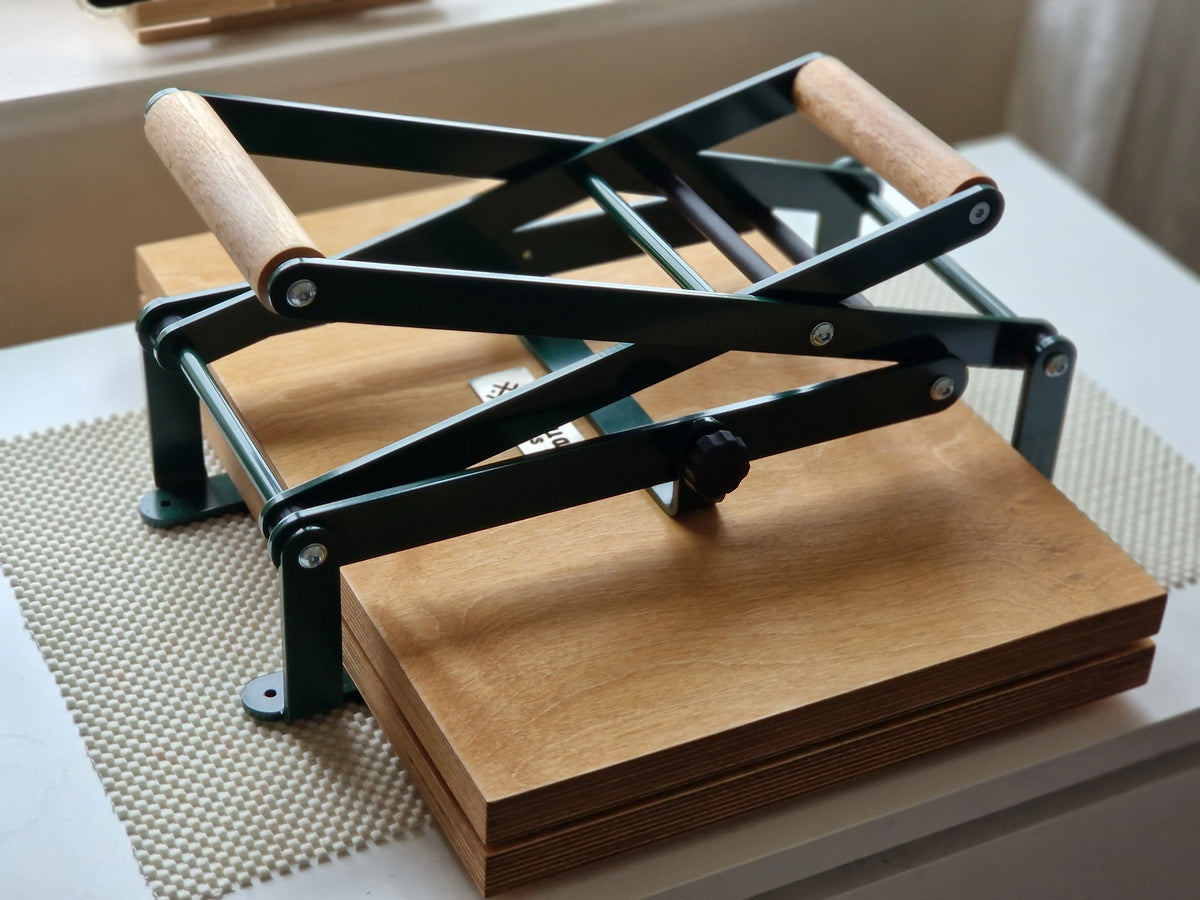
Esta es nuestra guía práctica para elegir papel para la impresión manual de bloques de linóleo. Ya sea que estés bruñendo con una cuchara de madera, trabajando con nuestro Baren de madera para impresión para una cobertura amplia y uniforme, o usando nuestro Baren de vidrio para impresión para trabajos de detalle fino — el papel que elijas da forma al resultado tanto como tus herramientas. Y si has pasado de imprimir a mano a trabajar con una de nuestras prensas, desde la compacta Prensa Lino A5 hasta la Prensa Textil Lino A2 de escala de estudio, sabrás que la elección del papel también cambia con el método.
Qué considerar al elegir papel para la impresión manual de lino
No existe un papel perfectamente universal. Cada impresor desarrolla preferencias con el tiempo, moldeadas por el estilo de trabajo, las tintas utilizadas y el tipo de acabado que busca. Pero hay algunas propiedades que vale la pena entender antes de comprar.
GSM – El peso importa más de lo que crees
GSM significa gramos por metro cuadrado, y es la medida estándar del peso del papel en la impresión artística. Para la impresión manual de bloques de lino, el rango útil se sitúa aproximadamente entre 30 y 120 gsm.
- Papeles ligeros (30–60 gsm) — típicamente papeles japoneses o asiáticos como variedades de washi o kozo. Aceptan la tinta maravillosamente y son indulgentes bajo un baren, pero requieren una mano cuidadosa y firme.
- Papeles medios (70–100 gsm) — el punto ideal para la mayoría de las impresiones manuales. Lo suficientemente robustos para manejarlos sin tensión, lo suficientemente ligeros para una buena transferencia de tinta sin presión excesiva.
- Papeles más pesados (100–120 gsm) — a menudo papeles de impresión artística occidentales tradicionales. Se sienten satisfactorios al trabajar y mantienen bien el detalle, pero requieren una presión más consistente al bruñir a mano.
Cualquier cosa por encima de 120 gsm generalmente funciona mejor en una prensa — algo que nuestra Prensa Lino A3 y Prensa Lino A4 manejan con facilidad. Al imprimir a mano, el papel más pesado tiene más probabilidades de dar resultados desiguales a menos que tu técnica sea muy controlada.
Textura de la superficie: lisa, granulada o algo intermedio
La superficie del papel se describe como lisa (prensada en caliente), ligeramente texturizada (prensada en frío) o rugosa. Para la impresión de linograbado, una superficie lisa a ligeramente texturizada generalmente funciona mejor — permite que tu rodillo de tinta transfiera la tinta limpiamente del bloque al papel sin que la textura del pliego compita con la textura de tu talla.
Libre de ácido no es opcional
Si vas a hacer estampas duraderas — para enmarcar, vender, regalar — usa papel libre de ácido. El papel ácido se amarillea y se deteriora con el tiempo. La mayoría de los papeles de impresión de calidad son libres de ácido por defecto, pero siempre vale la pena comprobarlo. La etiqueta generalmente dirá libre de ácido, pH neutro o archival.
Tamaño y formato del papel
Ajusta tu papel a tu bloque y a tu espacio de trabajo. Deja suficiente margen alrededor del área de imagen para que el papel quede plano y no se ondule durante la impresión. Si usas una Lámina de lino cortada a un tamaño específico, planifica el tamaño de tu papel antes de comenzar a tallar.
Color: ¿blanco, natural o algo más?
La mayoría de los impresores utilizan blanco por defecto, pero los papeles naturales o color crema pueden añadir una calidez que el papel blanco frío no ofrece. Los papeles japoneses de tono crema dan a las estampas una calidad atemporal y artesanal que se adapta bien a temas botánicos, figurativos y decorativos.
Papeles que recomendamos para la impresión manual de bloques de lino
Estos son papeles que hemos probado en nuestro propio estudio, usando nuestros barens, rodillos y Tinta Lino Renesans H2Oil.
Kitakata – ~30 gsm
Kitakata es un papel kozo japonés y uno de nuestros favoritos para la impresión manual. Es muy ligero, lo que significa que se adapta al bloque y recoge la tinta con una presión mínima. Los resultados suelen ser hermosamente suaves — expresivos y orgánicos.
Funciona bien para: cortes gruesos y medios, ediciones, aplicaciones de chine-collé
Cuidado con: líneas muy finas — puede ser implacable si el papel se desplaza durante el bruñido
GSM: ~30
Awagami Mingeishi – ~45 gsm
Awagami Mingeishi tiene un gramaje un paso superior al Kitakata y es uno de los papeles más versátiles que hemos encontrado para el linograbado manual. La superficie fibrosa da a las estampas una maravillosa calidad de impresión manual. Se combina especialmente bien con nuestra Tinta Lino Renesans H2Oil.
Funciona bien para: la mayoría de los temas, ediciones, cortes finos y medios
Cuidado con: la aplicación de tinta muy abundante — puede saturarse rápidamente
GSM: ~45
Fabriano Rosaspina – 60–80 gsm
Fabriano Rosaspina es un papel italiano con una larga historia en la impresión artística. Es un pliego suave, de tono ligeramente cálido, con una superficie aterciopelada que funciona excepcionalmente bien para la impresión manual con nuestro Baren de madera para impresión.
Funciona bien para: trabajo figurativo, imágenes atmosféricas, ediciones de bellas artes
Cuidado con: el manchado de tinta si trabajas demasiado despacio
GSM: 60–80
Hahnemühle Woodstock – 100 gsm
Hahnemühle Woodstock es un papel alemán con un tono cálido y natural y una textura ligeramente rugosa. Aplicar la tinta de manera uniforme con nuestro Rodillo Lino de 18 cm antes de imprimir ayuda a garantizar una cobertura completa en este papel.
Funciona bien para: trabajo gráfico y tipográfico, imágenes atrevidas, zines
Cuidado con: el detalle fino — la textura romperá las líneas muy delgadas
GSM: 100
Rives BFK – 115–250 gsm
Rives BFK es algo así como un estándar en la impresión de bellas artes. Los pesos más ligeros (alrededor de 115 gsm) son ideales para la impresión manual con nuestro Baren de vidrio; las versiones más pesadas son más adecuadas para nuestra Prensa Lino A3 o Prensa Lino A4.
Funciona bien para: ediciones de bellas artes, estampas de exposición
GSM: 115–250 (usa 115 para impresión manual)
Strathmore 300 Papel de Impresión – 120 gsm
Strathmore 300 es un papel de impresión ampliamente disponible y asequible que rinde muy por encima de su precio. Entintar con nuestro Rodillo de 6 cm da una cobertura precisa para bloques más pequeños en este papel.
Funciona bien para: pruebas, trabajo estudiantil, ediciones donde el costo importa
GSM: 120
Impresión manual vs. impresión con prensa — ¿Cambia la elección del papel?
Sí — pero los papeles más ligeros suelen ser la mejor opción para ambos métodos.
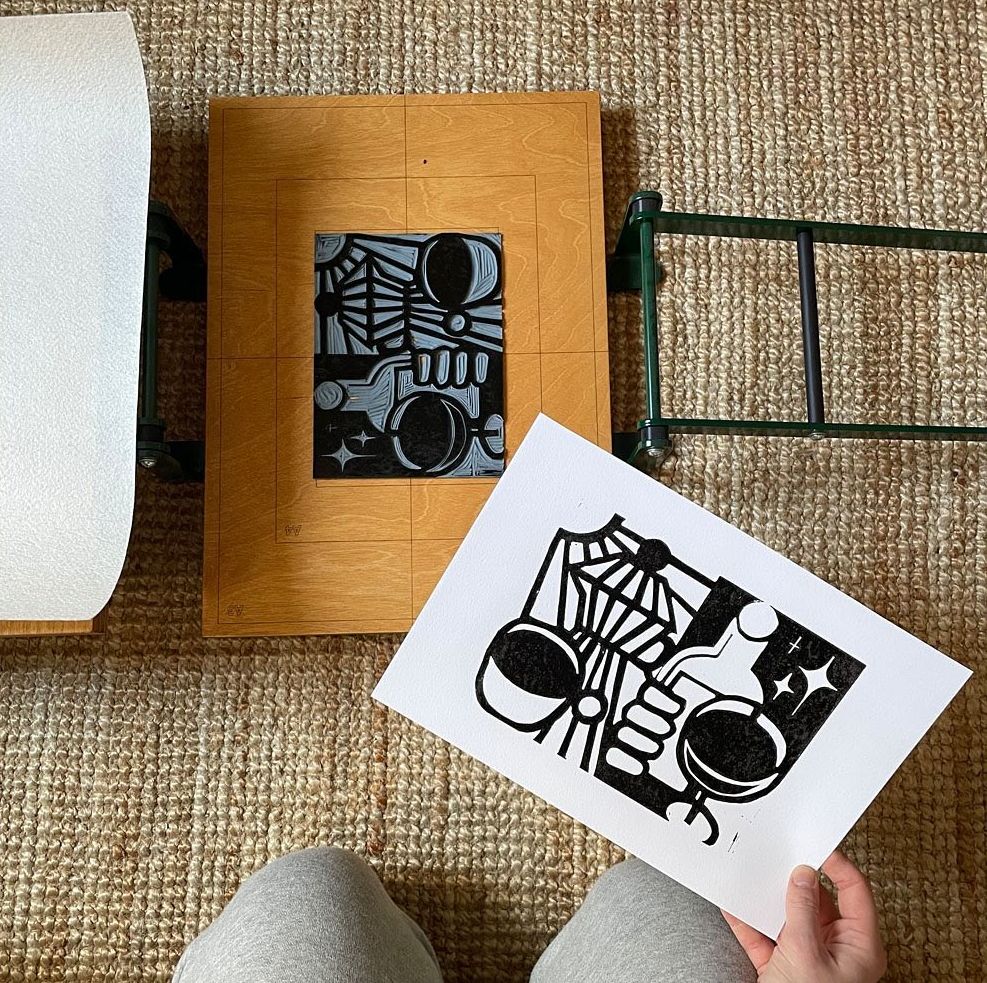
Al imprimir a mano, los papeles más ligeros requieren menos presión y generalmente producen una transferencia de tinta más fiable. Al usar una prensa — ya sea nuestra Prensa Lino A5, Prensa Lino A4, Prensa Lino A3 o Prensa Textil Lino A2 — la presión mecánica uniforme te permite imprimir en papeles más pesados también.
Dicho esto, los papeles más ligeros a menudo capturan el detalle más fácilmente y requieren menos presión para lograr una impresión limpia, incluso en una prensa. Una prensa amplía tus opciones, pero no necesariamente hace que los papeles más pesados sean la mejor elección.
Una nota sobre las pruebas vs. las estampas finales
Antes de comprometer un hermoso pliego de Fabriano Rosaspina o BFK, haz una prueba en papel japonés ligero. Coloca un trozo de Fieltro Lino debajo de tu papel al imprimir a mano — proporciona una base suave y uniforme que ayuda a que la tinta se transfiera más uniformemente. Una prueba no es una estampa fallida — es la conversación antes de la palabra final.
Dónde comprar
La mayoría de estos papeles están disponibles a través de proveedores especializados en impresión artística. En Europa, busca en Intaglio Printmaker, Cass Art o tu proveedor de arte independiente local. Para todo lo demás — barens, rodillos, tintas y fieltros — nuestra colección completa cubre lo esencial.
Reflexión final
El papel no es una ocurrencia de último momento en la impresión artística. Es la mitad de la conversación entre tú y tu bloque. Empieza con una o dos hojas de algo nuevo, haz una prueba y observa cómo se siente. No hay sustituto para manejar el papel tú mismo.
Si tienes preguntas sobre cómo combinar papel con herramientas específicas, encuéntranos en Instagram o mándanos un mensaje. Imprimir es un ritual, y estamos aquí para todo ello.
Uso de un rodillo de pasador para impresión en relieve en impresión en bloque
La historia del linograbado y sus artistas
1 comentario
Good One https://subchathakur.wixsite.com/igurucool