

Relief Printing Pin Rollers in Studio & Professional Use
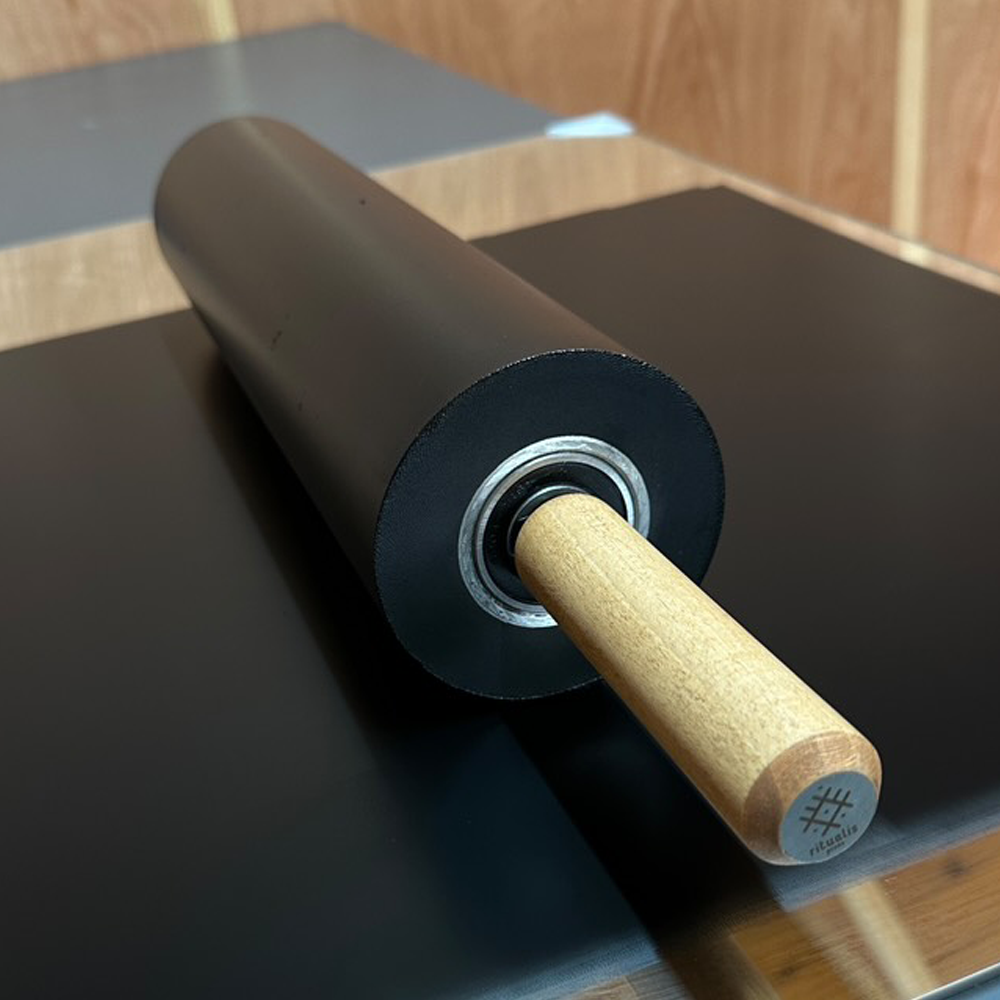
A relief printing pin roller is a type of brayer with two handles at the ends of a roller pin with a rubber surface on ball-bearings. This allows for two-handed use like with a baker’s pin, while the rubber surface is either harder or softer for different applications. Although, in general, the roller pin is ideal for applying even pressure distribution when applying ink to larger blocks in fine art printing.
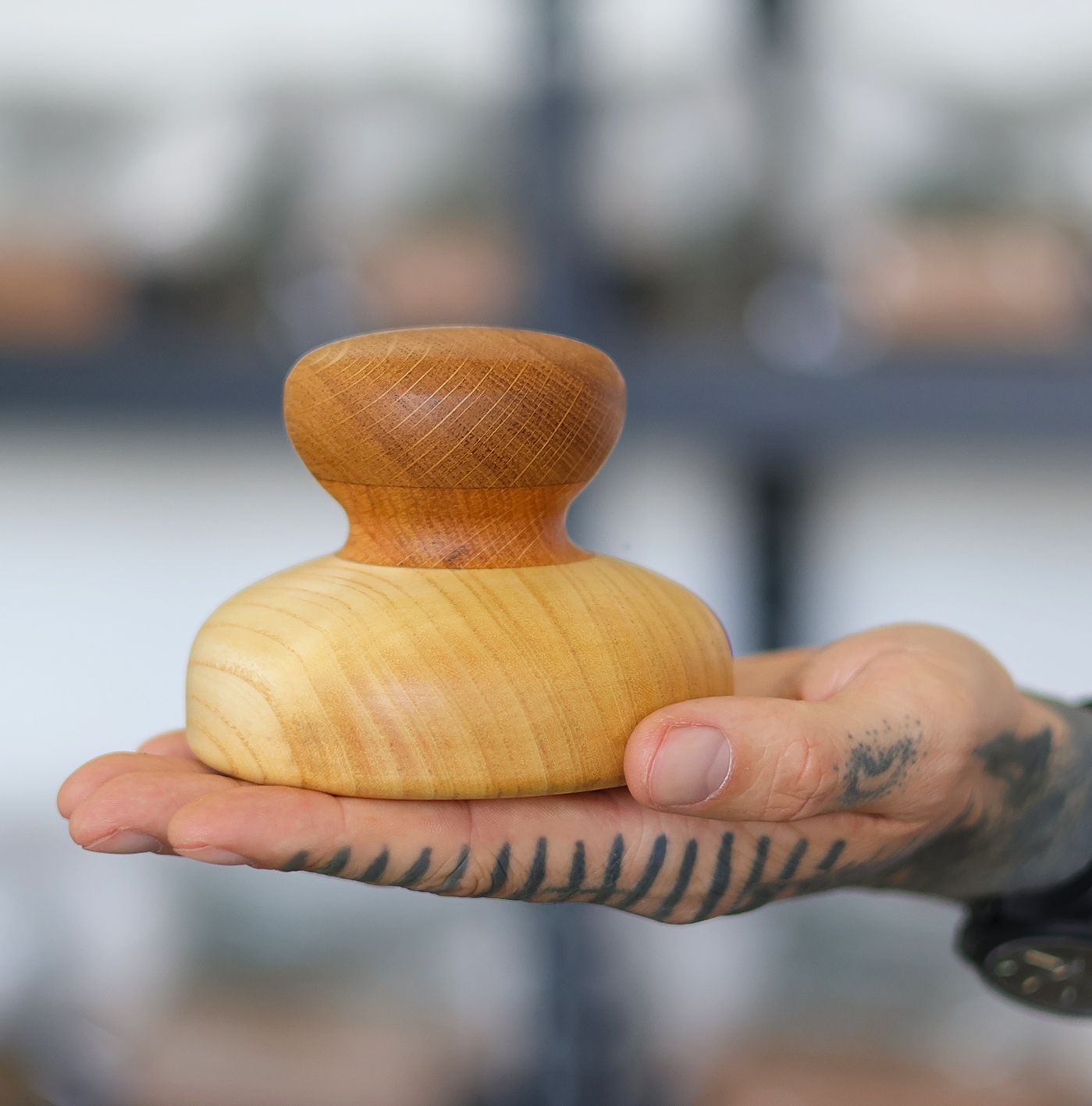
Using a printmaking pin roller is a practical alternative to relief printing using a wooden or glass baren, or using professional block printing presses. This includes for artistic crafting of linocut, woodcut, lithography, monotype, and other intaglio and planographic printmaking techniques.
But what qualities should you look for in a relief printing & linocut pin roller? Read ahead to learn about this special type of brayer, from different designs and usability, to rubber hardness and shore value considerations. I’ll also share the latest lino roller rolling out from Ritualis Press, with recommendations for artist and professional studio use.

Lino Pin Roller Design & Materials
High-quality lino pin rollers often feature designs of artisan-crafted and polished wood with metal ball-bearing systems and NBR rubber. NBR rubber is a synthetic rubber ideal for printmaking thanks to its flexibility, smooth surface, and durability. The material is highly resistant to oils, chemicals, cracking, and general wear and tear for easy maintenance and longer lifespans. That amounts to quick cleaning while at the same time offering long-term usability with excellent ink adhesion and smooth, even transfers.
Meanwhile, there are harder and softer NBR rubbers, with most manufacturers and artists in agreement that softer rubber is easier to ink up quickly and correctly. In this way, it’s often ideal for beginners in linocut and block printing.
For example, in linocut especially, softer rubber often adheres perfectly even to battleship grey lino. However, softer rubbers do come with the tradeoff of occasionally drowning out finer details. On the other hand, harder rubbers can help to capture the finer, deeply-cut lines. Although, it does sometimes take more time and effort to evenly apply the ink to blocks using harder rubbers.

Finding a Balance between Hard and Soft Rollers
Rubber hardness can be understood by a measurement called “shore value.” Shore value uses a numerical value from 0 to 100 to express a material’s resistance to indentation. In other words, a higher value represents a harder material, while lower values indicate a softer material. Then, ultimately, the ideal shore value for block printing depends on the artist’s preference, style, and experience.
If you have deeply-cut, fine lines to make stand out for example, a higher shore value might be useful. For detailed prints but with cleaner lines and no worry of drowning out finer details, the lower shore values are perfectly suitable.
Thus, for many artists, there is a balance somewhere in between that provides a more universal solution for hand printing by roller. It’s then commonplace to use a roller alongside other relief printing breyers and fine art block printing supplies for more complex prints, such as when bleeding colors together.
Lino Pin Rollers by Ritualis Press
In terms of usability, one of the best new tools rolling out from Ritualis Press is their two-handed Lino Pin Roller. The length of the rubber surface of the lino pin roller is 400 mm, and ideal for medium to larger printing formats from A5 to A3 and larger.
At the same time, the NBR rubber combines durability with versatility for even distribution of pressure when applying ink to blocks. This supports not only studio & professional linocut printing but also the wider range of woodcut and block printmaking techniques. It is also great for both beginner level and professional block printmakers alike.
Moreover, the design of the lino roller by Rituals Press is expertly hand-crafted and sanded by local Czech woodcrafters. And, just like the wooden barens, the hard oak wood handles of the lino rollers offer a natural and comfortable grip. Then, the metal frame with a solid core featuring precision ball-bearings ensures stability and smooth movement during printing.
Each roller also has two separate wooden stands to compliment any studio space and secure the roller in place when not in use.

Which Inks Work Best with the Lino Pin Roller?
Using oil-based inks with the lino roller by Ritualis Press offers the best results thanks to a thicker consistency than water-based inks. This allows oil-based inks to adhere better to the rubber roller, and to transfer easier and quicker to a block or plate. It also helps to ensure richer and more vibrant colors than if using only a soft rubber roller or hard rubber roller.
After using the lino pin roller, cleaning it is then just as easy as inking up a block or plate with it. It takes only wiping the roller with a dry cloth, and applying a solvent like turpentine or mineral spirits. The process is even quicker after using only a small amount of ink, as a quick roll over paper can remove most excess ink before washing.

More Quintessential Block Printing Supplies
Beyond relief and linocut printing presses, Ritualis Press offers a range of fine art block printing supplies. And just like their lino pin rollers, it’s clear these were designed by artists, for artists. Their shop offers barens of artisan-crafted wood and hand-blown glass, ink rollers, inks, cutting matts, felts & more. It’s an artist’s one-stop shop for block printing supplies.
Would you like to see what other artists make with Ritualis Press? Discover videos from other avid printmakers in the Ritualis Press Press Instagram Community. Discover new printmakers, get inspiration, and participate in the ritual of printmaking together.
Written by Justin
Woodcut Printmaking with Ritualis Press